The reason for its popularity— and the magic behind turmeric— lies in its active compound curcumin.
Curcumin has been utilized in Ayurvedic medicine for over 3000 years. Historically used a panacea for a wide variety of ailments, only recently has clinical research confirmed what traditional Indian medicine has known for countless generations—turmeric is chocked full of health benefits.
Recently, the Arthritis Foundation identified curcumin as a major anti-inflammatory force and suggested incorporating turmeric into your daily diet. The compound has also been shown to fight against free radicals and bolster the body’s natural antioxidant defenses. It eases joint pain and much like it’s cousin ginger, turmeric has stomach-soothing capabilities, making it ideal for those with colitis, irritable bowel disease and gastric inflammation.
In one study, the compound worked as well as ibuprofen in reducing pain and improved function in people suffering from osteoarthritis. Another study linked orally taking turmeric extract with lower cholesterol levels after only three months. (15)
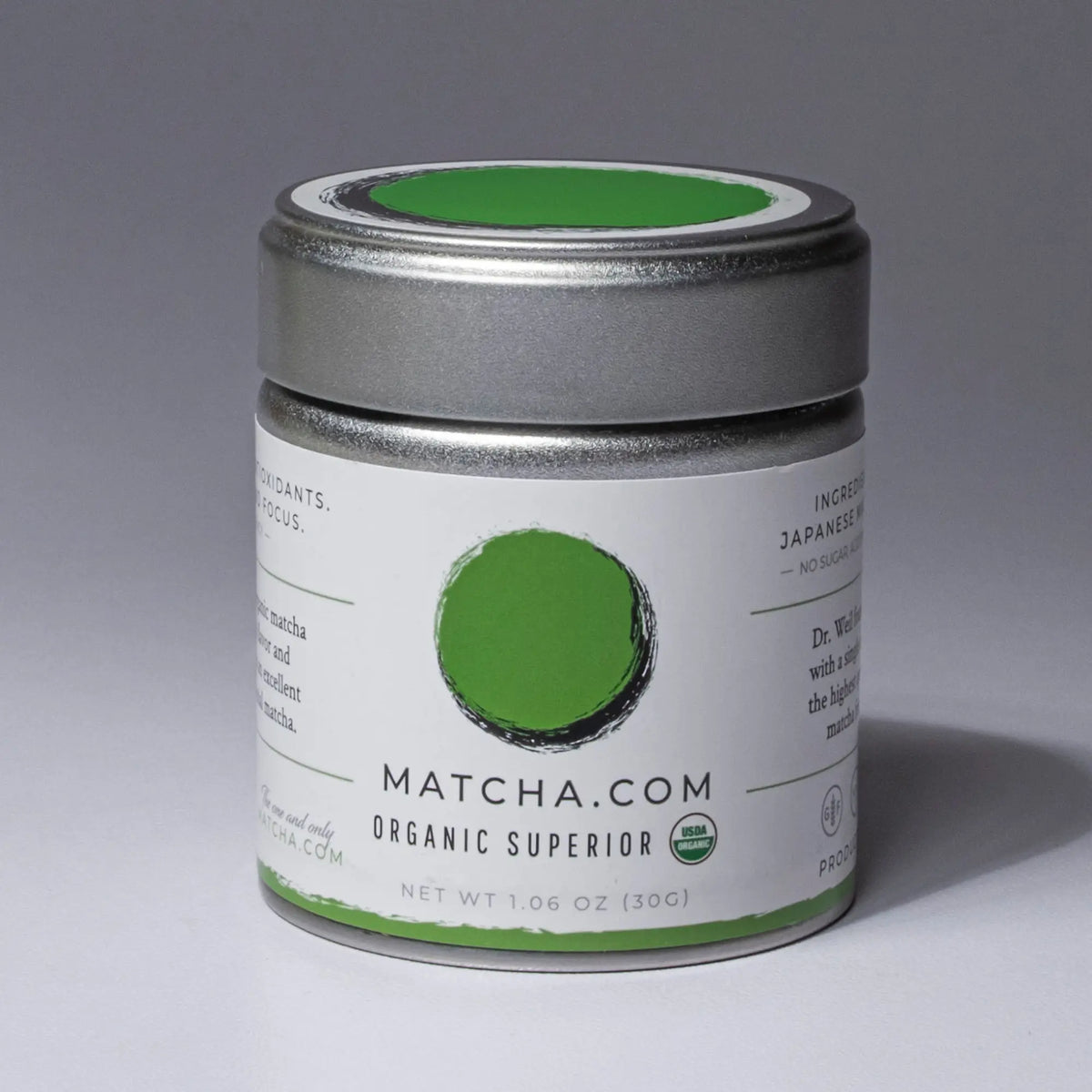
If you were wondering, turmeric and matcha are the perfect pair! Not only does turmeric add an amazing twist to the already earthy-sweetness of matcha, but both are packed with antioxidants and vitamins. The meditative ritual of preparing matcha compliments the memory and mood-boosting properties already found in curcumin.
Turmeric has low bioavailability. This means that the body’s absorption and access to the health compounds in turmeric is often challenging. The good news is that many experts believe that adding this golden spice to tea may be the most effective way to consume turmeric. It’s already a wildly popular custom in India and Japan—whether in grated or pure powder form, turmeric is a perfect addition to your favorite tea blend -- just remember to add a dash of black pepper to boost the bioavailability!
-
Angelo, L. S., & Kurzrock, R. (2009). Turmeric and Green Tea: A Recipe for the Treatment of B-Chronic Lymphocytic Leukemia: Fig. 1. Clinical Cancer Research, 15(4), 1123–1125. https://doi.org/10.1158/1078-0432.ccr-08-2791
-
Astinfeshan, M., Rasmi, Y., Kheradmand, F., Karimipour, M., Rahbarghazi, R., Aramwit, P., Nasirzadeh, M., Daeihassani, B., Shirpoor, A., Gholinejad, Z., & Saboory, E. (2019). Curcumin inhibits angiogenesis in endothelial cells using downregulation of the PI3K/Akt signaling pathway. Food Bioscience, 29, 86–93. https://doi.org/10.1016/j.fbio.2019.04.005
-
Benzinger, T. L. S., Blazey, T., Jack, C. R., Koeppe, R. A., Su, Y., Xiong, C., Raichle, M. E., Snyder, A. Z., Ances, B. M., Bateman, R. J., Cairns, N. J., Fagan, A. M., Goate, A., Marcus, D. S., Aisen, P. S., Christensen, J. J., Ercole, L., Hornbeck, R. C., Farrar, A. M., . . . Morris, J. C. (2013). Regional variability of imaging biomarkers in autosomal dominant Alzheimer’s disease. Proceedings of the National Academy of Sciences, 110(47), E4502–E4509. https://doi.org/10.1073/pnas.1317918110
-
Brown, D. A., & Hunger, R. M. (1999). Regulation of in vitro Ptr-toxin Production by Pyrenophora tritici-repentis Isolates by Environmental Parameters and Accumulation of Ptr-toxin in Culture over Time. Regulation der in-vitro-Produktion des Ptr-Toxins von Pyrenophora tritici-repentis-Isolaten durch Umweltparameter sowie zeitabhängige Akkumulation des Ptr-Toxins in Kultur. Journal of Phytopathology, 147(1), 25–29. https://doi.org/10.1111/j.1439-0434.1999.tb03803.x
-
Bundy, R., Walker, A. F., Middleton, R. W., & Booth, J. (2004). Turmeric Extract May Improve Irritable Bowel Syndrome Symptomology in Otherwise Healthy Adults: A Pilot Study. The Journal of Alternative and Complementary Medicine, 10(6), 1015–1018. https://doi.org/10.1089/acm.2004.10.1015
-
Carroll, R. E., Benya, R. V., Turgeon, D. K., Vareed, S., Neuman, M., Rodriguez, L., Kakarala, M., Carpenter, P. M., McLaren, C., Meyskens, F. L., & Brenner, D. E. (2011). Phase IIa Clinical Trial of Curcumin for the Prevention of Colorectal Neoplasia. Cancer Prevention Research, 4(3), 354–364. https://doi.org/10.1158/1940-6207.capr-10-0098
-
Choi, G. Y., Kim, H. B., Hwang, E. S., Lee, S., Kim, M. J., Choi, J. Y., Lee, S. O., Kim, S. S., & Park, J. H. (2017). Curcumin Alters Neural Plasticity and Viability of Intact Hippocampal Circuits and Attenuates Behavioral Despair and COX-2 Expression in Chronically Stressed Rats. Mediators of Inflammation, 2017, 1–9. https://doi.org/10.1155/2017/6280925
-
Chuengsamarn, S., Rattanamongkolgul, S., Luechapudiporn, R., Phisalaphong, C., & Jirawatnotai, S. (2012). Curcumin Extract for Prevention of Type 2 Diabetes. Diabetes Care, 35(11), 2121–2127. https://doi.org/10.2337/dc12-0116
-
Davis, B. M., Pahlitzsch, M., Guo, L., Balendra, S., Shah, P., Ravindran, N., Malaguarnera, G., Sisa, C., Shamsher, E., Hamze, H., Noor, A., Sornsute, A., Somavarapu, S., & Cordeiro, M. F. (2018). Topical Curcumin Nanocarriers are Neuroprotective in Eye Disease. Scientific Reports, 8(1). https://doi.org/10.1038/s41598-018-29393-8
-
Donath, M. Y., Ehses, J. A., Maedler, K., Schumann, D. M., Ellingsgaard, H., Eppler, E., & Reinecke, M. (2005). Mechanisms of -Cell Death in Type 2 Diabetes. Diabetes, 54(Supplement 2), S108–S113. https://doi.org/10.2337/diabetes.54.suppl_2.s108
-
Dulbecco, P. (2013). Therapeutic potential of curcumin in digestive diseases. World Journal of Gastroenterology, 19(48), 9256. https://doi.org/10.3748/wjg.v19.i48.9256
-
Edwards, R. L., Luis, P. B., Varuzza, P. V., Joseph, A. I., Presley, S. H., Chaturvedi, R., & Schneider, C. (2017). The anti-inflammatory activity of curcumin is mediated by its oxidative metabolites. Journal of Biological Chemistry, 292(52), 21243–21252. https://doi.org/10.1074/jbc.ra117.000123
-
Giordano, & Tommonaro. (2019). Curcumin and Cancer. Nutrients, 11(10), 2376. https://doi.org/10.3390/nu11102376
-
He, Y., Yue, Y., Zheng, X., Zhang, K., Chen, S., & Du, Z. (2015). Curcumin, Inflammation, and Chronic Diseases: How Are They Linked? Molecules, 20(5), 9183–9213. https://doi.org/10.3390/molecules20059183
-
Hewlings, S., & Kalman, D. (2017). Curcumin: A Review of Its Effects on Human Health. Foods, 6(10), 92. https://doi.org/10.3390/foods6100092
-
Hurley, L. L., Akinfiresoye, L., Nwulia, E., Kamiya, A., Kulkarni, A. A., & Tizabi, Y. (2013). Antidepressant-like effects of curcumin in WKY rat model of depression is associated with an increase in hippocampal BDNF. Behavioural Brain Research, 239, 27–30. https://doi.org/10.1016/j.bbr.2012.10.049
-
Jäger, R., Lowery, R. P., Calvanese, A. V., Joy, J. M., Purpura, M., & Wilson, J. M. (2014). Comparative absorption of curcumin formulations. Nutrition Journal, 13(1). https://doi.org/10.1186/1475-2891-13-11
-
Jeenger, M. K., Shrivastava, S., Yerra, V. G., Naidu, V., Ramakrishna, S., & Kumar, A. (2015). Curcumin: A pleiotropic phytonutrient in diabetic complications. Nutrition, 31(2), 276–282. https://doi.org/10.1016/j.nut.2014.06.015
-
Jiang, S., Han, J., Li, T., Xin, Z., Ma, Z., Di, W., Hu, W., Gong, B., Di, S., Wang, D., & Yang, Y. (2017). Curcumin as a potential protective compound against cardiac diseases. Pharmacological Research, 119, 373–383. https://doi.org/10.1016/j.phrs.2017.03.001
-
Karimian, M. S., Pirro, M., Johnston, T. P., Majeed, M., & Sahebkar, A. (2017). Curcumin and Endothelial Function: Evidence and Mechanisms of Protective Effects. Current Pharmaceutical Design, 23(17). https://doi.org/10.2174/1381612823666170222122822
-
Kim, S. W., Ha, K. C., Choi, E. K., Jung, S. Y., Kim, M. G., Kwon, D. Y., Yang, H. J., Kim, M. J., Kang, H. J., Back, H. I., Kim, S. Y., Park, S. H., Baek, H. Y., Kim, Y. J., Lee, J. Y., & Chae, S. W. (2013). The effectiveness of fermented turmeric powder in subjects with elevated alanine transaminase levels: a randomised controlled study. BMC Complementary and Alternative Medicine, 13(1). https://doi.org/10.1186/1472-6882-13-58
-
Kochman, J., Jakubczyk, K., Antoniewicz, J., Mruk, H., & Janda, K. (2020). Health Benefits and Chemical Composition of Matcha Green Tea: A Review. Molecules, 26(1), 85. https://doi.org/10.3390/molecules26010085
-
Kulkarni, S. K., Bhutani, M. K., & Bishnoi, M. (2008). Antidepressant activity of curcumin: involvement of serotonin and dopamine system. Psychopharmacology, 201(3), 435–442. https://doi.org/10.1007/s00213-008-1300-y
-
Kurup, V. P., & Barrios, C. S. (2008). Immunomodulatory effects of curcumin in allergy. Molecular Nutrition & Food Research, 52(9), 1031–1039. https://doi.org/10.1002/mnfr.200700293
-
Luber, R. P., Rentsch, C., Lontos, S., Pope, J. D., Aung, A. K., Schneider, H. G., Kemp, W., Roberts, S. K., & Majeed, A. (2019). Turmeric Induced Liver Injury: A Report of Two Cases. Case Reports in Hepatology, 2019, 1–4. https://doi.org/10.1155/2019/6741213
-
Maithili Karpaga Selvi, N., Sridhar, M. G., Swaminathan, R. P., & Sripradha, R. (2014). Efficacy of Turmeric as Adjuvant Therapy in Type 2 Diabetic Patients. Indian Journal of Clinical Biochemistry, 30(2), 180–186. https://doi.org/10.1007/s12291-014-0436-2
-
Menon, V. P., & Sudheer, A. R. (2007). ANTIOXIDANT AND ANTI-INFLAMMATORY PROPERTIES OF CURCUMIN. ADVANCES IN EXPERIMENTAL MEDICINE AND BIOLOGY, 105–125. https://doi.org/10.1007/978-0-387-46401-5_3
-
Ng, Q., Soh, A., Loke, W., Venkatanarayanan, N., Lim, D., & Yeo, W. S. (2018). A Meta-Analysis of the Clinical Use of Curcumin for Irritable Bowel Syndrome (IBS). Journal of Clinical Medicine, 7(10), 298. https://doi.org/10.3390/jcm7100298
-
Patrick, K., & Stanbrook, M. B. (2018). Take turmeric with a grain of salt. Canadian Medical Association Journal, 190(43), E1270. https://doi.org/10.1503/cmaj.181358
-
Pescosolido, N., Giannotti, R., Plateroti, A., Pascarella, A., & Nebbioso, M. (2013). Curcumin: Therapeutical Potential in Ophthalmology. Planta Medica, 80(04), 249–254. https://doi.org/10.1055/s-0033-1351074
-
Pianpumepong, P., Anal, A. K., Doungchawee, G., & Noomhorm, A. (2012). Study on enhanced absorption of phenolic compounds of Lactobacillus-fermented turmeric (Curcuma longaLinn.) beverages in rats. International Journal of Food Science & Technology, 47(11), 2380–2387. https://doi.org/10.1111/j.1365-2621.2012.03113.x
-
Prasad S, Aggarwal BB. Turmeric, the Golden Spice: From Traditional Medicine to Modern Medicine. In: Benzie IFF, Wachtel-Galor S, editors. Herbal Medicine: Biomolecular and Clinical Aspects. 2nd edition. Boca Raton (FL): CRC Press/Taylor & Francis; 2011. Chapter 13. Available from: https://www.ncbi.nlm.nih.gov/books/NBK92752/
-
Qiu, P., Man, S., Li, J., Liu, J., Zhang, L., Yu, P., & Gao, W. (2016). Overdose Intake of Curcumin Initiates the Unbalanced State of Bodies. Journal of Agricultural and Food Chemistry, 64(13), 2765–2771. https://doi.org/10.1021/acs.jafc.6b00053
-
Ramaholimihaso, T., Bouazzaoui, F., & Kaladjian, A. (2020). Curcumin in Depression: Potential Mechanisms of Action and Current Evidence—A Narrative Review. Frontiers in Psychiatry, 11. https://doi.org/10.3389/fpsyt.2020.572533
-
Sanmukhani, J., Satodia, V., Trivedi, J., Patel, T., Tiwari, D., Panchal, B., Goel, A., & Tripathi, C. B. (2013). Efficacy and Safety of Curcumin in Major Depressive Disorder: A Randomized Controlled Trial. Phytotherapy Research, 28(4), 579–585. https://doi.org/10.1002/ptr.5025
-
Sharifi-Rad, J., Rayess, Y. E., Rizk, A. A., Sadaka, C., Zgheib, R., Zam, W., Sestito, S., Rapposelli, S., Neffe-Skocińska, K., Zielińska, D., Salehi, B., Setzer, W. N., Dosoky, N. S., Taheri, Y., el Beyrouthy, M., Martorell, M., Ostrander, E. A., Suleria, H. A. R., Cho, W. C., . . . Martins, N. (2020). Turmeric and Its Major Compound Curcumin on Health: Bioactive Effects and Safety Profiles for Food, Pharmaceutical, Biotechnological and Medicinal Applications. Frontiers in Pharmacology, 11. https://doi.org/10.3389/fphar.2020.01021
-
Shep, D., Khanwelkar, C., Gade, P., & Karad, S. (2019). Safety and efficacy of curcumin versus diclofenac in knee osteoarthritis: a randomized open-label parallel-arm study. Trials, 20(1). https://doi.org/10.1186/s13063-019-3327-2
-
Shoba, G., Joy, D., Joseph, T., Majeed, M., Rajendran, R., & Srinivas, P. (1998). Influence of Piperine on the Pharmacokinetics of Curcumin in Animals and Human Volunteers. Planta Medica, 64(04), 353–356. https://doi.org/10.1055/s-2006-957450
-
Sikora, E., Bielak-Zmijewska, A., Mosieniak, G., & Piwocka, K. (2010). The Promise of Slow Down Ageing May Come from Curcumin. Current Pharmaceutical Design, 16(7), 884–892. https://doi.org/10.2174/138161210790883507
-
Sikora, E., Scapagnini, G., & Barbagallo, M. (2010). Curcumin, inflammation, ageing and age-related diseases. Immunity & Ageing, 7(1). https://doi.org/10.1186/1742-4933-7-1
-
Small, G. W., Siddarth, P., Li, Z., Miller, K. J., Ercoli, L., Emerson, N. D., Martinez, J., Wong, K. P., Liu, J., Merrill, D. A., Chen, S. T., Henning, S. M., Satyamurthy, N., Huang, S. C., Heber, D., & Barrio, J. R. (2018). Memory and Brain Amyloid and Tau Effects of a Bioavailable Form of Curcumin in Non-Demented Adults: A Double-Blind, Placebo-Controlled 18-Month Trial. The American Journal of Geriatric Psychiatry, 26(3), 266–277. https://doi.org/10.1016/j.jagp.2017.10.010
-
Thangapazham, R. L., Sharma, A., & Maheshwari, R. K. (2019). BENEFICIAL ROLE OF CURCUMIN IN SKIN DISEASES. ADVANCES IN EXPERIMENTAL MEDICINE AND BIOLOGY, 343–357. https://doi.org/10.1007/978-0-387-46401-5_15
-
Wang, Z., Jones, G., Winzenberg, T., Cai, G., Laslett, L. L., Aitken, D., Hopper, I., Singh, A., Jones, R., Fripp, J., Ding, C., & Antony, B. (2020). Effectiveness of Curcuma longa Extract for the Treatment of Symptoms and Effusion–Synovitis of Knee Osteoarthritis. Annals of Internal Medicine, 173(11), 861–869. https://doi.org/10.7326/m20-0990
-
Wongcharoen, W., Jai-aue, S., Phrommintikul, A., Nawarawong, W., Woragidpoonpol, S., Tepsuwan, T., Sukonthasarn, A., Apaijai, N., & Chattipakorn, N. (2012). Effects of Curcuminoids on Frequency of Acute Myocardial Infarction After Coronary Artery Bypass Grafting. The American Journal of Cardiology, 110(1), 40–44. https://doi.org/10.1016/j.amjcard.2012.02.043
-
Wu, S., & Xiao, D. (2016). Effect of curcumin on nasal symptoms and airflow in patients with perennial allergic rhinitis. Annals of Allergy, Asthma & Immunology, 117(6), 697–702.e1. https://doi.org/10.1016/j.anai.2016.09.427
-
Zhang, K., Chen, M., Du, Z. Y., Zheng, X., Li, D. L., & Zhou, R. P. (2018). Use of curcumin in diagnosis, prevention, and treatment of Alzheimer’s disease. Neural Regeneration Research, 13(4), 742. https://doi.org/10.4103/1673-5374.230303
-
Zhang, L., Fiala, M., Cashman, J., Sayre, J., Espinosa, A., Mahanian, M., Zaghi, J., Badmaev, V., Graves, M. C., Bernard, G., & Rosenthal, M. (2006). Curcuminoids enhance amyloid-β uptake by macrophages of Alzheimer’s disease patients. Journal of Alzheimer’s Disease, 10(1), 1–7. https://doi.org/10.3233/jad-2006-10101