

Why Matcha Blends Taste Different: How Growing and Processing Changes Flavor
If you’re a matcha lover, you’ve probably noticed that different types of matcha blends can taste surprisingly different....
Matcha 101
A matcha guide for beginners: what it is, where it came from, how to choose a grade and make a good bowl.

What is matcha
Matcha is green tea, shaded, steamed, dried and stone-ground into a fine powder that you whisk and drink, whole leaf and all.
Most green tea is steeped: you soak the leaves, then throw them away. With matcha you drink the leaf itself, ground so fine it stays suspended when whisked. That’s where its color, body and depth of flavor come from.
To learn about matcha, start in the field. Weeks before harvest, the tea fields are covered to shade the plants. After picking, the leaves are steamed, dried and sorted into tencha, the leaf matcha is ground from.
History
Powdered tea began in China and found its home in Japan, where it shaped a whole culture of tea.
Through the Tang and Song dynasties, tea was steamed, dried and pressed; by the Song era, powdered tea was whisked in bowls.
The monk Eisai returns from China with tea seeds and the practice of whisking powdered tea.
Matcha becomes part of daily life in Zen monasteries, and tea gatherings spread among samurai and nobility.
Tea master Sen no Rikyū shapes chanoyu, the Japanese tea ceremony, around simplicity and respect.
Uji growers begin shading their tea fields, deepening matcha’s jade color and its savory, layered flavor.
Matcha goes global, whisked in an heirloom bowl, poured over ice or folded into dessert.
Where to start
Start with Organic Superior for bowls and lattes, go decaf any time of day, or take single-serve sticks on the go.
Shop all matcha

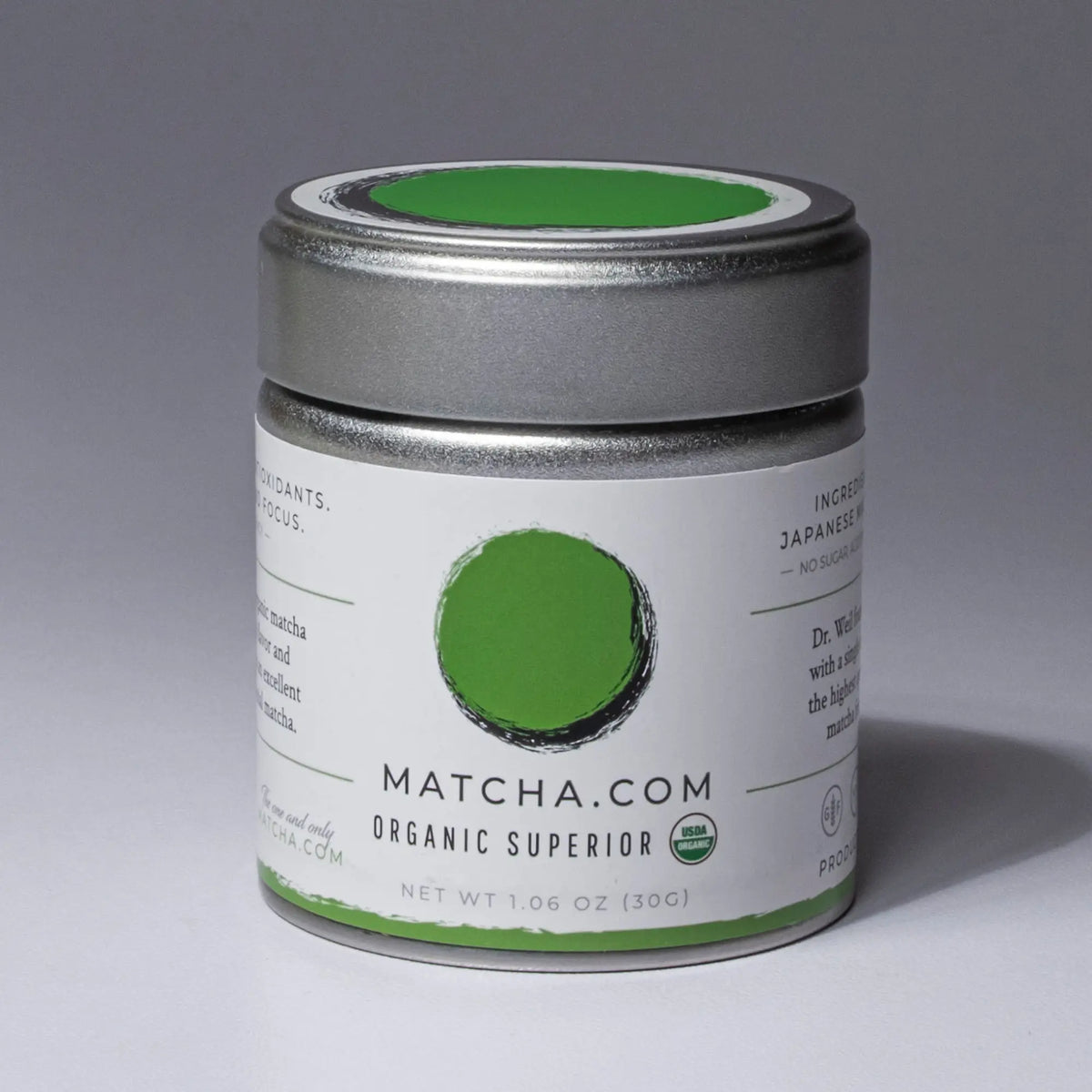
Our recommended starting point. Certified-organic matcha from Kagoshima, Japan: floral, bright and lightly sweet, equally good whisked in a bowl or in your morning latte.
In stock · Ready to ship

Organic matcha measured into single-serve sticks. Shake with cold water or whisk with hot, wherever your day goes: no whisk, no measuring. 24 sticks.
In stock · Ready to ship

Looking for decaf matcha? Certified-organic Japanese matcha with most of the caffeine removed by a chemical-free process. Creamy and earthy, for evenings and lattes.
In stock · Ready to ship
Make it
You’ll need a bowl, a bamboo whisk and water just off the boil.
How to make a matcha latte
Sift about half a teaspoon (1 g) into a bowl so it whisks smooth, without lumps.
Sieve · bowl

Pour in about 70 ml (2.5 oz) of water at 80 °C / 175 °F. Boiling water makes it bitter.
Steaming never boiling

Whisk briskly in a W or M shape until a fine foam forms, then drink it straight from the bowl.
Bamboo whisk (chasen)
Compared
How a bowl of matcha differs from a cup of steeped green tea or coffee.
| Matcha | Steeped green tea | Coffee | |
|---|---|---|---|
| What you drink | The whole leaf, ground and whisked | An infusion; the leaves are discarded | An infusion of roasted, ground beans |
| How it’s grown | Shaded for weeks before harvest | Usually grown in full sun | Coffee cherries, dried and roasted |
| Caffeine per serving | About 35 mg per 1 g serving* | About 30 mg per cup† | About 95 mg per cup† |
| Preparation | Whisked into water at 80 °C, about 30 seconds | Steeped for 1–3 minutes | Brewed for 4–5 minutes, or pulled as a shot |
| Taste | Grassy, sweet and savory, with body | Light and grassy | Roasted, often bitter |
| Color | Vivid green | Pale yellow-green | Dark brown |
*From our lab results: about 37.5 mg of caffeine per gram. †Typical averages; actual amounts vary by brew and serving size.
Glossary
Tea runs deep in Japanese life. These words show how, from field to tea room.
If you’re a matcha lover, you’ve probably noticed that different types of matcha blends can taste surprisingly different....

While all types of tea come from the same plant (yes, you read that right!) not all tea is...

Tiramisu doesn’t just have to be for dessert. If you’re a tiramisu lover, but want something a bit...
Questions
Matcha is a green tea, but it’s grown and drunk differently. The plants are shaded before harvest, the leaves are ground into a powder, and you whisk and drink the whole leaf instead of steeping it and throwing it away.
About 37 mg in a 1 g serving, based on our lab results. It varies a little by grade and by how much you use.
Yes. Our Organic Decaf Matcha is made for when you’d rather skip the caffeine.
Ceremonial grades are made for drinking on their own, whisked with water. Culinary grades are bolder, made to stand up to milk, baking and cooking. See our grades for which is which.
About 1 g (half a teaspoon, or one to two bamboo scoops) for a bowl of usucha, the everyday thin tea. For a latte, use 2 g (1 tsp): our matcha latte guide has the full method.
Keep it sealed, cool and dark. Once opened, close the tin tightly, keep it in the fridge and enjoy it within a month or two for the best color and flavor.
In Japan. All our USDA organic matcha is grown in Kagoshima.
