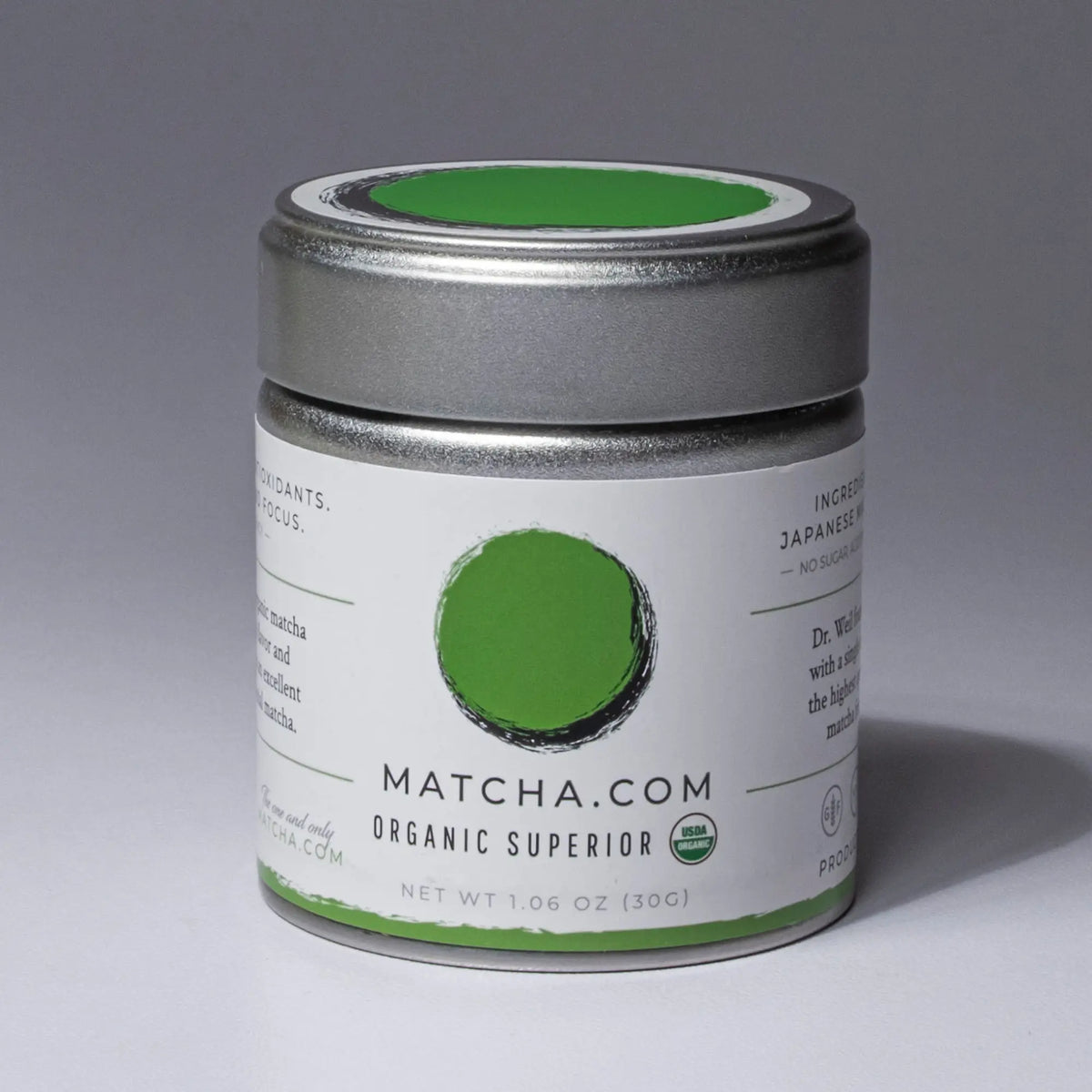

Learn · Japanese tea culture
The Japanese tea ceremony & the ritual of matcha
In the Japanese tea ceremony, matcha is prepared with care and shared with intention. Here is what the ceremony teaches, and how to bring a little of it into every day.

Chanoyu
What is chanoyu?
Chanoyu, “the way of tea,” is the Japanese tea ceremony: the preparation and serving of matcha as a considered art.
In the 16th century, Sen no Rikyū shaped the form it still takes, championing simplicity, natural materials and full attention to the guest.
A ceremony can last minutes or hours. Every movement, from cleaning the bowl to whisking the tea, is done with purpose.
The point is presence, not perfection.


Four principles
The heart of the way of tea
Four words sit at the center of chanoyu. Hover or tab through them, or let them come to you.
WaKeiSeiJaku
Between host and guest, and with the seasons.
For the people present and for every object used.
A clean space, clean tools and a clear mind.
The calm that comes from the first three.
Ichi-go ichi-e
Tea masters use these words to say that every gathering happens only once, so each one deserves your full attention.
Usucha + koicha
Koicha vs usucha: two bowls
Thin tea and thick tea, made from one matcha.

Usucha · Thin tea
- Matcha
- About 2 g
- Water
- 2–3 oz
- Texture
- Light and frothy
- Our pick
- Ritual Grade
Usucha is whisked into a light, frothy bowl. It's the style most people know.
Shop Ritual Grade
Koicha · Thick tea
- Matcha
- About 4 g
- Water
- 1–1.5 oz
- Texture
- Glossy and rich
- Our pick
- Master Grade
Koicha uses about twice the matcha and half the water, kneaded slowly into a glossy, rich tea. It calls for the finest leaves.
Shop Master GradeThe tools
Traditional matcha tools
-
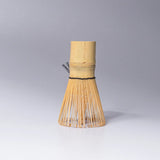
Chasen Whisk
A whisk carved from a single piece of bamboo, which turns matcha powder and water into smooth tea.
 $35.00
Shop Bamboo Matcha Whisk | Traditional Matcha Tea Whisk
-
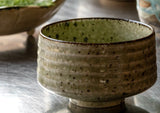
Chawan Bowl
The tea bowl, wide enough to whisk in. Its shape and glaze change with the season.
 $42.00
Shop Ceramic Matcha Bowl | Handcrafted Japanese Chawan
-
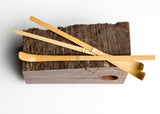
Chashaku Scoop
The bamboo scoop. One scoop holds about 1 g of matcha.
 $22.00
Shop Tea Scoop Chashaku | Bamboo Matcha Scoop
-
Furui Sifter
The sifter, which breaks up clumps for the smoothest bowl.
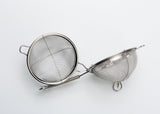 $20.00
Shop Matcha Sifter Furui | 100% Stainless Steel Matcha Tool

Through the year
A ceremony for every season
The tea calendar follows the seasons, from the first kettle of the new year to opening the new tea in autumn.
-
Hatsugama
初釜
The first kettle of the new year. In January, teachers and students gather for the year's first bowl of tea.

-
Shoburo
初風炉
In May the sunken winter hearth is closed and the kettle moves to a portable brazier, keeping the fire away from guests in the warm months.

-
Nagori
名残
In October, a farewell to the last of the previous year's tea, often served with worn and mended utensils.

-
Kuchikiri
口切
In November the seal is cut on the jar of tea picked in spring, marking the new year of tea.


A modern ritual
Bring the ritual home
You don't need a tea room to enjoy the spirit of chanoyu. Set aside five minutes in the morning.
-
Warm your bowl
Rinse the bowl and whisk with hot water, then dry them.
-
Sift your matcha
Sift about 2 g into the bowl for the smoothest tea.
-
Whisk slowly
Add hot water and whisk until a fine foam forms.
-
Drink it fresh
Sip it while it's warm, without your phone.
The ritual stays. Life changes around it.
Questions
Good to know.
How long does a Japanese tea ceremony last?
It depends on the gathering. A simple tea can take less than an hour, while a full formal ceremony with a meal, thick tea and thin tea can last around four hours.
Koicha vs usucha: what is the difference between them?
Usucha (thin tea) is about 2 g of matcha whisked with 2–3 oz of water into a light, frothy bowl. Koicha (thick tea) uses about twice the matcha and half the water, kneaded slowly into a glossy, rich tea.
Which matcha suits usucha and koicha?
Our Ritual Grade is made for usucha. For koicha, choose our Master Grade, from the finest leaves.
Do I need special tools to make matcha at home?
A bamboo whisk (chasen), a wide bowl (chawan), a scoop (chashaku) and a sifter (furui) make the smoothest bowl. To start, a whisk and any wide bowl will do.
Do I have to follow the ceremony's rules to enjoy matcha?
No. The heart of chanoyu is attention, not rules. Five quiet minutes with a freshly whisked bowl carries the same spirit.
