



Fall can bring its own kind of stress— it’s what some even call ‘autumn anxiety.’ As the seasons shift, we’re adjusting both physically and mentally: shorter days, cooler weather, and the return to stricter routines.
Add in the anticipation of the busy holiday season, and it’s no wonder this time of year can feel a little heavier, almost like a milder form of seasonal affective disorder.
That’s where a ritual can help—pairing matcha with a musically led meditation is a simple, supportive way to ground your energy, calm your mind, and reset this fall season.
Matcha + Music + Meditation = A Synergistic Ritual
While research studies specifically centered around matcha paired with musical meditation are limited, each offers scientifically backed supportive benefits:
-
Matcha + Music: Matcha and music both can help support calming clarity, stress-reducing and focus-enhancing energy, creating a serene, attentive state—an ideal foundation for meditation.
-
Meditation + Music: Music deepens meditative practice, regulating emotion and promoting deeper immersion and focus.
-
Matcha + Meditation: L-theanine enhances your attention, making a relaxed state of mind more accessible and sustained for those new to meditation.

How to try this reset ritual right now
Need some inspiration on how to fold matcha and musical meditation into your daily routine? Download our matcha meditations playlist, whip up a bowl of matcha, find a comfy place to sit and keep these tips in mind:
-
Press Play on the Music
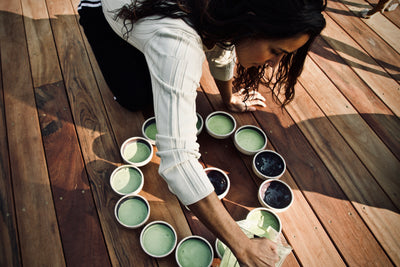
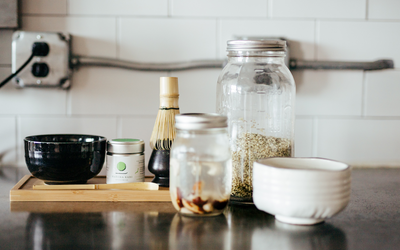
Press play on our guided meditation playlist, and then begin to prepare your matcha mindfully—notice the steam, color, and aroma, and how it moves with a complementary cadence to the music you are listening to. Let it evoke grounded warmth. -
Mindful Movement
Once your matcha is ready to be enjoyed, sip as you find gentle movement. Think 5 minutes of slow walking or sitting and swaying. This primes both your body and mind, easing you into the present moment and reducing seasonal stiffness. -
Relax and Breathe
Once you’ve finished your matcha, try to find a comfortable seat on the floor if you were walking or standing. Close your eyes. Inhale deeply, exhale fully three times—anchoring into your body. Perhaps try the 4-7-8 breathing technique. -
Sip, meditate, glow
Sip slowly, breathe gently, and enter 10 minutes of meditation by bringing your attention to different sensations you are experiencing and parts of your body. Let your mind drift softly between matcha's calm energy and the music's soothing rhythm. -
Close with Kindness
After your practice, tell yourself one thing you are grateful and excited for in the day that awaits you. Then take a nice big stretch and step into the rest of your day.

The bottom line
As fall and winter set in, stress has a way of snowballing—shorter days, tighter routines, holiday pressures, and even the dip in immunity can all add up quickly. That’s why creating a simple daily ritual matters.
Pairing matcha with musically led meditation helps break the cycle—matcha’s L-theanine supports calm focus while music-guided mindfulness eases tension—giving you space to reset before stress piles on.
You may also like:
5 Ways Matcha is Beneficial for Meditation
The benefits of combining hot yoga and matcha
How to build healthy daily routines
Disclaimer: These statements in this blog post have not been evaluated by the Food and Drug Administration. The information provided here is for educational purposes only and should not be considered as medical advice. It's essential to consult with a qualified healthcare professional before making any dietary or lifestyle changes.
References
Hidese, S., Ogawa, S., Ota, M., & Kunugi, H. (2017). Effects of L-theanine administration on stress-related symptoms and cognitive functions in healthy adults: A randomized controlled trial. Nutrients, 9(10), 1132. https://doi.org/10.3390/nu9101132
Unno, K., Egawa, T., Okutsu, S., Fujitani, K., Takabayashi, F., Kishido, T., ... & Hoshino, M. (2018). Daily consumption of green tea catechins and the risk of influenza infection in elderly nursing home residents: A prospective clinical study. BMC Complementary and Alternative Medicine, 18(1), 87. https://doi.org/10.1186/s12906-018-2134-6
Goyal, M., Singh, S., Sibinga, E. M. S., Gould, N. F., Rowland-Seymour, A., Sharma, R., ... & Haythornthwaite, J. A. (2014). Meditation programs for psychological stress and well-being: A systematic review and meta-analysis. JAMA Internal Medicine, 174(3), 357–368. https://doi.org/10.1001/jamainternmed.2013.13018
Creswell, J. D., Irwin, M. R., Burklund, L. J., Lieberman, M. D., Arevalo, J. M., Ma, J., ... & Cole, S. W. (2012). Mindfulness-based stress reduction training reduces loneliness and pro-inflammatory gene expression in older adults: A small randomized controlled trial. Brain, Behavior, and Immunity, 26(7), 1095–1101. https://doi.org/10.1016/j.bbi.2012.07.006
Gallego, J., Aguilar-Parra, J. M., Cangas, A. J., Langer, Á. I., & Mañas, I. (2014). Effect of a mindfulness program on stress, anxiety and depression in university students. The Spanish Journal of Psychology, 17, E109. https://doi.org/10.1017/sjp.2014.102
Thoma, M. V., Ryf, S., Mohiyeddini, C., Ehlert, U., & Nater, U. M. (2013). Emotion regulation through listening to music in everyday situations. Cognition and Emotion, 27(3), 534–543. https://doi.org/10.1080/02699931.2012.750235
Bradt, J., & Dileo, C. (2014). Music interventions for mechanically ventilated patients. Cochrane Database of Systematic Reviews, 2014(12), CD006902. https://doi.org/10.1002/14651858.CD006902.pub3