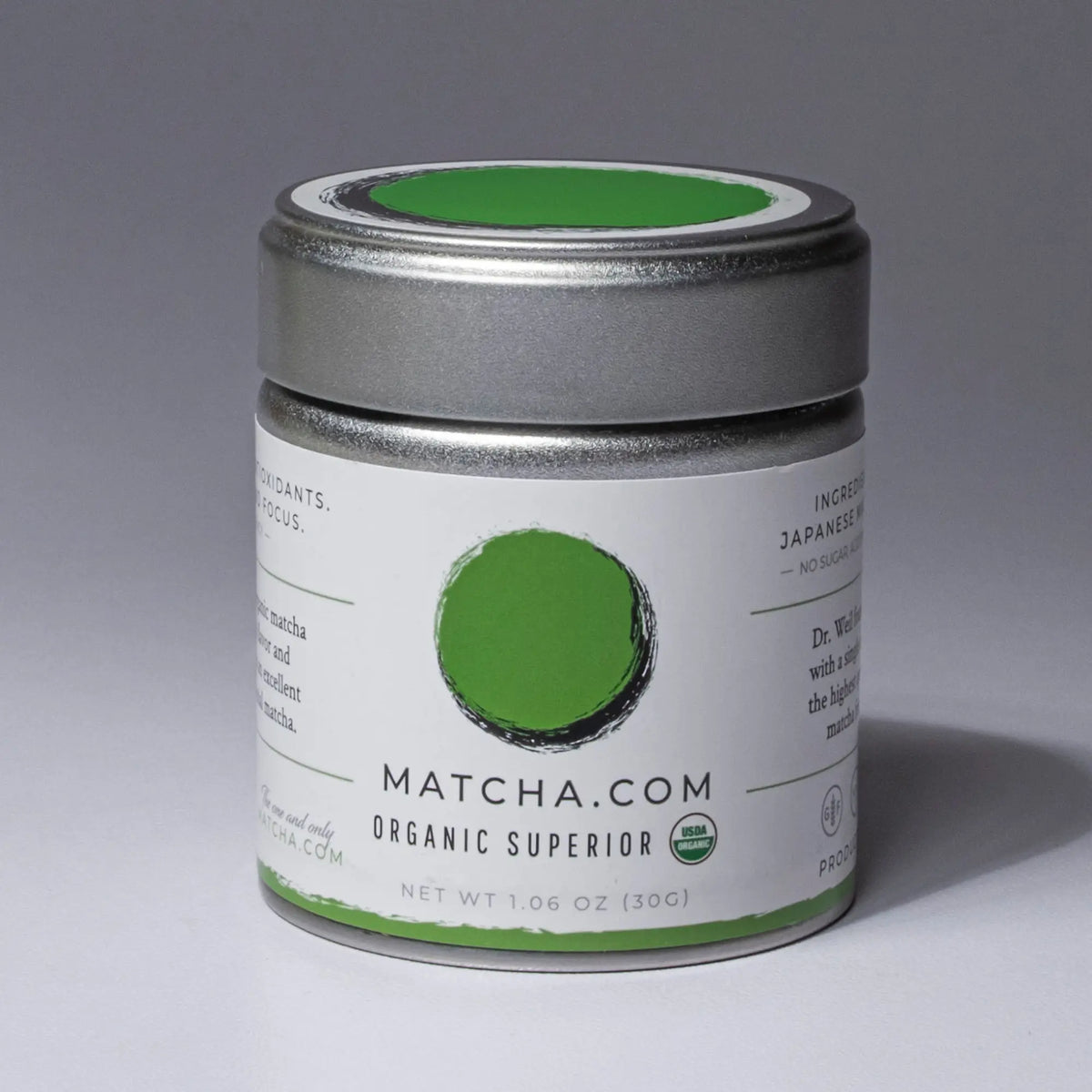


Curious about how to prepare matcha at home? In this guide, we walk you through the traditional method for making Japanese matcha green tea. You don’t need a lot of fancy tools—just a few essentials and high-quality matcha.
Before diving into matcha lattes, it’s important to master the foundational preparation. Making matcha shouldn’t be complicated or time-consuming, but it does require the right technique to bring out the best flavor and texture.
One key step? Sifting the matcha.
This simple step helps prevent clumps and ensures a smooth, creamy cup. Watch closely to see how it's done. And remember: always choose vibrant, bright green matcha that smells fresh and grassy—that’s a sign of premium quality.
How to make matcha the traditional way, step by step
You'll need a tea bowl (chawan), a bamboo scoop (chashaku), a bamboo whisk (chasen), a small sifter and good drinking matcha, such as a ceremonial grade matcha.
- Heat the water. Warm it until steam first appears and turn off the heat. That's well below boiling, about 170–180°F. Boiling water makes matcha taste bitter.
- Warm the bowl. Pour about half a cup of the hot water into your tea bowl, swirl, then pour it out and dry the inside with a towel.
- Sift the matcha. Press about 1 teaspoon (3 scoops with a chashaku) through the sifter into the warm bowl.
- Add water. Pour in about ¼ cup (2 to 2½ oz) of the hot water.
- Whisk. Start with slow strokes to wet the powder, then whisk quickly from the wrist in an "M" or "W" pattern, just above the bottom of the bowl rather than scrubbing it. Lift the whisk gradually as a layer of fine, even foam forms, about 20 to 30 seconds.
- Enjoy it fresh. Drink it within a few minutes, before the foam settles. Then rinse the whisk and wipe the scoop.
Thin tea or thick tea?
The steps above make usucha, or "thin tea," the everyday way to drink matcha. Koicha, or "thick tea," uses more matcha and less water and is kneaded slowly with the whisk into a smooth, almost syrupy tea with no foam. It's traditionally made only with the highest grades, because any bitterness shows. If you're just starting out, begin with thin tea.
How to taste your first bowl
Take a moment before you drink. First, notice the color of the tea. Then breathe in its aroma. Finally, take a sip, and don't be shy about slurping: in Japan it's polite, and pulling in a little air brings out more flavor. A bite of a plain cookie or a few unsalted nuts between sips balances the tea nicely. When you're done, sit back for a moment and enjoy the lingering taste.
A few tips for a better bowl
- Look for foam. Good matcha whisked well gives a thick layer of tiny, even bubbles. If it won't foam no matter how you whisk, the matcha is likely old or a lower grade.
- Keep it fresh. Store matcha airtight and away from light, ideally in the fridge or freezer once opened, and enjoy it within a couple of months.
- Mind your stomach. Matcha is traditionally enjoyed in the morning. If it ever feels strong on an empty stomach, have it with a little food.
- No whisk? A small electric frother works too. The traditional method is worth learning, but there's no wrong way to enjoy your matcha.
But what is matcha, exactly?
Matcha is a finely ground powder made from specially grown green tea leaves. For the last few weeks before harvest, the plants are shaded to boost chlorophyll and enhance their signature vivid green color. Unlike regular green tea, which is steeped and discarded, matcha is whisked into water and consumed whole—leaf and all. That means you get the full benefit of its nutrients, including powerful antioxidants and calming L-theanine.

