
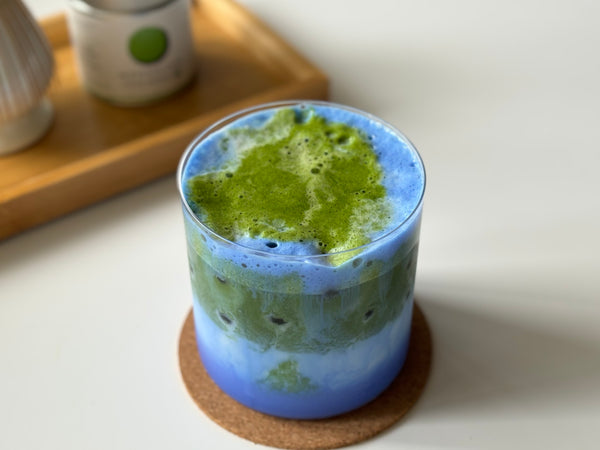
Celebrate Earth Day this year with a chlorella matcha latte. Chlorella is a type of algae that is lesser known than its cousin spirulina, but is actually more nutritious and beneficial. This beautiful and fun latte is the perfect way to honor Mother Earth while also prioritizing your own health and energy.

Recipe
Chlorella Matcha Latte
- 5 min
- 1 latte
- Sifter, bowl, bamboo whisk, milk frother, 12 oz cup
Ingredients
Method
-
Sift the matcha. Sift 1½ teaspoons (2 tea ladles) of matcha powder into a bowl.
-
Whisk the matcha. Add the hot water and whisk with a bamboo whisk for about 60 seconds, or until frothy. Set aside.
-
Froth the chlorella. In a 12 oz (about 360 ml) cup, add the chlorella powder, blue butterfly pea powder, and half the milk. Froth until the chlorella powder is well suspended in the milk.
-
Sweeten. Add the sweetener and froth once again.
-
Add ice and milk. Add ice and pour in the rest of the milk.
-
Pour the matcha. Lastly, pour in the matcha and enjoy.
What is Chlorella
Chlorella is a type of single-celled green algae that grows in fresh water. It has a high number of antioxidants, vitamins, and minerals and is thought to have many positive effects on overall health. Since chlorella has a tough outer cell wall, we’re unable to digest it in its natural form, so chlorella typically comes in a powder or as an extract or capsule. We’ve used the powder form for this matcha latte!
Chlorella may be a helpful supplement for anyone on a plant-based diet. It is a complete protein source and contains B12, iron, and vitamin C (vitamin C helps iron absorption). It also contains omega-3s, which can be hard to come by on a plant-based diet. Animal studies also show that chlorella may be useful for ridding the body of heavy metals and other harmful compounds. Chlorella may also improve cholesterol and enhance immunity.
While both chlorella and matcha have incredible health benefits, we promise this latte doesn’t taste “healthy.” It’s creamy, perfectly sweet, and has a hint of earthiness.
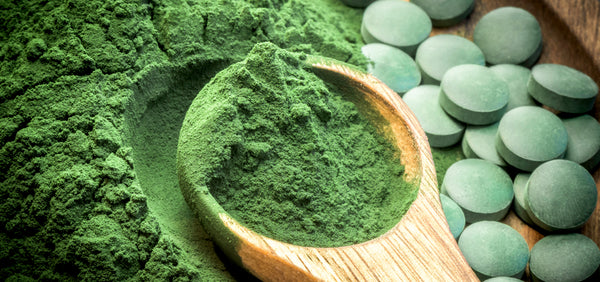
Why chlorella instead of spirulina
Despite the fact that chlorella has a long list of nutritious benefits, spirulina is more commonly used as a dietary supplement. We’ve opted for chlorella instead of spirulina as chlorella is a green algae, and spirulina is a member of the blue-green algae family.
Blue-green algae, or cyanobacteria, sometimes contains a toxin, which can damage the liver or nervous system, produce GI problems, and irritate the skin. There’s also a concern that blue-green algae contain neurotoxins. Not all blue-green algae are toxic, but the reason they produce toxins at any given time is not well understood. There’s also no current way to predict when an algae bloom has toxins in it. Chlorella has none of these concerns so it makes for the safer choice.
Next time you are looking for a unique spin on a matcha latte, try this recipe. The colors are stunning, making it a fun choice for kids!
Disclaimer: These statements in this blog post have not been evaluated by the Food and Drug Administration. The information provided here is for educational purposes only and should not be considered medical advice. It's essential to consult with a qualified healthcare professional before making any dietary or lifestyle changes.
References:
Main Department of Environmental Protection. Cyanobacteria (Blue-green Algae). https://www.maine.gov/dep/water/lakes/cyanobacteria.html
Sears ME. Chelation: harnessing and enhancing heavy metal detoxification--a review. ScientificWorldJournal. 2013 Apr 18;2013:219840. doi: 10.1155/2013/219840. PMID: 23690738; PMCID: PMC3654245.
Paul Alan Cox et al, “Dietary exposure to an environmental toxin triggers neurofibrillary tangles and amyloid deposits in the brain.” Proceedings of the Royal Society B, January 20, 2016. rspb.royalsocietypublishing.org/content/283/1823/20152397

