



Living a healthy lifestyle can often feel overwhelming, mostly because we're constantly bombarded with thousands of things we supposedly need to buy, take, or do to be healthy. Thankfully, research shows the opposite - many of the biggest health benefits come from the small things we do consistently.

Simple daily habits compound over time, and consistency matters more than perfection. It really is the small, almost boring, things you do every day that can have the biggest impact on your long-term health.
Here are six simple, science-backed habits worth adding to your daily routine.
1. Start your morning with matcha instead of coffee

How you begin your morning can set the tone for the rest of your day. It can influence your energy, cravings, mood, and ability to focus. Starting your day with just one healthy habit often makes it easier to make healthier choices throughout the day.
Unlike coffee, matcha contains both caffeine and L-theanine, a naturally occurring amino acid that promotes a calm, relaxed state without making you feel drowsy. Research suggests this unique combination can improve attention and focus while reducing the anxiety and jitters that some people experience with coffee.
Because you're consuming the entire tea leaf when drinking matcha, you also receive a more concentrated dose of catechins - powerful plant compounds that have antioxidant and anti-inflammatory properties. The most abundant catechin in matcha, EGCG (epigallocatechin gallate), has been studied for its potential to support heart, metabolic, and healthy aging.
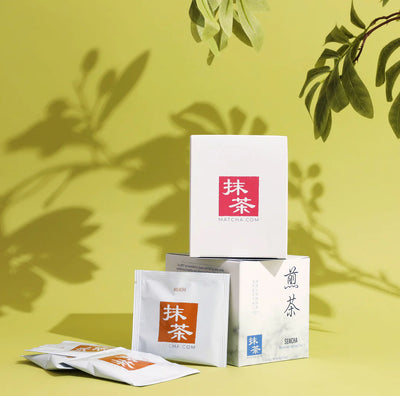
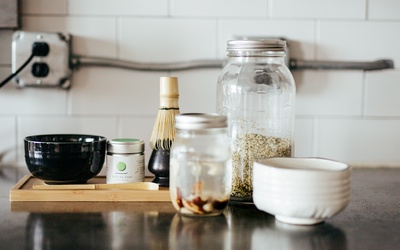
Try replacing one daily coffee with a traditional cup of matcha or a matcha latte and see how you feel.
2. Aim for 30 grams of fiber every day
It's estimated that up to 95% of Americans aren't getting enough fiber. The average adult consumes only about 15 grams per day, which is about roughly half of what's recommended.
Fiber is important for your gut health, supports digestion, helps maintain healthy cholesterol levels, improves blood sugar regulation, and keeps you feeling fuller for longer. Higher fiber intake has also been associated with a lower risk of heart disease, type 2 diabetes, colorectal cancer, and even premature death.
Instead of relying on fiber supplements, prioritize whole foods like:
-
Beans and lentils
-
Berries
-
Oats
-
Vegetables
-
Nuts and seeds
-
Whole grains
If you're not sure where to start, challenge yourself to include just one high-fiber food at every meal. Those small additions can add up quickly.
3. Aim for at least 2,500 steps every day

We all know exercise is important, but sometimes fitting it in is hard. But it doesn't have to be complicated, and every step really does count.
You've probably heard the goal of 10,000 steps a day, but research suggests meaningful health benefits begin well before that. Studies have found that as few as 2,500 daily steps are associated with a lower risk of all-cause mortality compared to very low levels of activity. And benefits increase as your step count does.
Walking is one of the easiest and most accessible forms of exercise. It supports heart health, helps regulate blood sugar, strengthens muscles and bones, boosts mood, and may also improve cognitive function. Plus, it's free.
If you're just getting started, aim for at least 2,500 steps each day. Once that becomes second nature, you can gradually increase your goal.
To sneak in some more steps, park a little farther away, take a walking break during the workday, or go for a short stroll after dinner.
4. Practice the 4-7-8 Breath Every Day

Taking just a few minutes to focus on your breathing can have measurable effects on both your mind and body.
The 4-7-8 breathing technique, popularized by our co-founder, Dr. Andrew Weil, helps activate the parasympathetic nervous system, your body's "rest and digest" mode. Research suggests that breathing exercises can help lower heart rate, reduce stress, decrease blood pressure, and promote relaxation.
To try it:
-
Inhale quietly through your nose for 4 seconds.
-
Hold your breath for 7 seconds.
-
Exhale slowly through your mouth for 8 seconds.
Repeat this cycle four times. It takes less than 2 minutes and is easy to build into either (or both!) your morning or evening routine.
5. Drink a glass of water with every meal

Staying hydrated is one of the simplest things you can do for your health, but so many people still don't drink enough water.
An easy way to make hydration a habit is to drink a full glass of water with every meal. Pairing water with something you already do every day makes it much easier to remember, and it can go a long way toward meeting your daily fluid needs.
Staying hydrated also supports healthy digestion and may help you better recognize your body's hunger and fullness cues, since thirst can sometimes be mistaken for hunger.
If plain water isn't your favorite, try adding fresh lemon, cucumber, mint, or muddled berries for a little natural flavor.
6. Put your phone away before getting into bed
We all know sleep is important, but many of us spend the last part of the day scrolling social media, checking emails, or watching videos in bed. Not only can this cut into the amount of sleep we're getting, but it can also interfere with the quality of that sleep.
The blue light emitted from phones, tablets, and other electronic devices can suppress melatonin, the hormone that signals your body it's time to sleep. Beyond the light itself, engaging with stimulating content, whether it's work emails or social media, can make it harder for your brain to wind down.
Research has found that limiting screen time before bed is associated with better sleep quality, longer sleep duration, and less daytime fatigue.
Try creating a "phone curfew" by putting your phone away 30 to 60 minutes before bedtime. Read a book, stretch, journal, or simply enjoy a few minutes of quiet instead. Your brain and sleep will thank you.
Bottom line
When it comes to better health, you don't need to change your entire life overnight. Small habits practiced consistently can have a surprisingly big impact over time.
If you're looking for a few places to start, try swapping your morning coffee for a cup of high-quality matcha, eating more fiber, moving your body a little more each day, building a simple breathing practice, drinking a glass of water with every meal, and giving yourself a break from your phone before bed.
Remember, good health isn't built by doing one big thing perfectly. It's built by doing the little things consistently.
Disclaimer: These statements in this blog post have not been evaluated by the Food and Drug Administration. The information provided here is for educational purposes only and should not be considered medical advice. It's essential to consult with a qualified healthcare professional before making any dietary or lifestyle changes.
Resources:
Sokary S, Al-Asmakh M, Zakaria Z, Bawadi H. The therapeutic potential of matcha tea: A critical review on human and animal studies. Curr Res Food Sci. 2022 Nov 23;6:100396. doi: 10.1016/j.crfs.2022.11.015. PMID: 36582446; PMCID: PMC9792400.
Barber TM, Kabisch S, Pfeiffer AFH, Weickert MO. The Health Benefits of Dietary Fibre. Nutrients. 2020 Oct 21;12(10):3209. doi: 10.3390/nu12103209. PMID: 33096647; PMCID: PMC7589116.
Ungvari Z, Fazekas-Pongor V, Csiszar A, Kunutsor SK. The multifaceted benefits of walking for healthy aging: from Blue Zones to molecular mechanisms. Geroscience. 2023 Dec;45(6):3211-3239. doi: 10.1007/s11357-023-00873-8. Epub 2023 Jul 26. PMID: 37495893; PMCID: PMC10643563.
Tudor-Locke C, Craig CL, Aoyagi Y, Bell RC, Croteau KA, De Bourdeaudhuij I, Ewald B, Gardner AW, Hatano Y, Lutes LD, Matsudo SM, Ramirez-Marrero FA, Rogers LQ, Rowe DA, Schmidt MD, Tully MA, Blair SN. How many steps/day are enough? For older adults and special populations. Int J Behav Nutr Phys Act. 2011 Jul 28;8:80. doi: 10.1186/1479-5868-8-80. PMID: 21798044; PMCID: PMC3169444.
Bentley TGK, D'Andrea-Penna G, Rakic M, Arce N, LaFaille M, Berman R, Cooley K, Sprimont P. Breathing Practices for Stress and Anxiety Reduction: Conceptual Framework of Implementation Guidelines Based on a Systematic Review of the Published Literature. Brain Sci. 2023 Nov 21;13(12):1612. doi: 10.3390/brainsci13121612. PMID: 38137060; PMCID: PMC10741869.
Popkin BM, D'Anci KE, Rosenberg IH. Water, hydration, and health. Nutr Rev. 2010 Aug;68(8):439-58. doi: 10.1111/j.1753-4887.2010.00304.x. PMID: 20646222; PMCID: PMC2908954.
Silvani MI, Werder R, Perret C. The influence of blue light on sleep, performance and wellbeing in young adults: A systematic review. Front Physiol. 2022 Aug 16;13:943108. doi: 10.3389/fphys.2022.943108. PMID: 36051910; PMCID: PMC9424753.