



Burnout culture has become so common that it almost feels expected. So many of us are trying to balance work and family, while also exercising regularly, eating healthy, cooking, cleaning, and keeping up with friends. It's no surprise that so many people feel exhausted.
The honest truth is that no one can do it all, all the time.

Somehow, we've normalized constantly being busy and running on empty, and caffeine, especially coffee and energy drinks, has almost become the unofficial mascot of burnout culture. Instead of slowing down, taking a break, or simply getting a good night's sleep, we reach for another cup of coffee or an extra shot of espresso to check more things off our to-do list.
While caffeine can be a really helpful fuel, eventually the energy wears off, reality sets in, and we’re back to being exhausted. Our nervous systems stay in overdrive, and we begin to mistake being constantly overstimulated for having energy.
One of the reasons we think matcha has seen such a boom in the past few years is that it’s become a very refreshing alternative to this cycle.
Coffee culture vs. tea culture

Coffee culture is built around speed and productivity. Grab a latte on the way to work, drink it in the car, order another between meetings, and power through the afternoon slump. The messaging is often about getting as much done as possible - wake up, hustle, repeat.
Tea culture has traditionally been different.
Whether it's matcha or an afternoon cup of herbal tea, tea has historically been associated with slowing down, being present, and taking a moment before moving on to the next thing. It's not necessarily the drink itself, but the mindset and ceremony around it.
You don’t need to spend 30 minutes whisking matcha every morning or adopt a formal tea ceremony. But knowing that matcha gives you steadier, calmer energy can sometimes be the shift you need to start making changes.
Burnout is more than feeling tired

We all have busy days or weeks, but burnout is different. It can show up as constant fatigue, trouble concentrating, irritability, lack of motivation, poor sleep, or the feeling that you're always behind, no matter how much you accomplish.
To really address burnout, you typically need to adopt some bigger lifestyle changes, but your daily habits contribute to how burned out you feel and can either fill your cup or empty it.
That's one reason we've seen so many people swapping coffee for matcha lately. It feels like we're collectively realizing that constantly pushing harder isn't sustainable. Even replacing your second or third cup of coffee with a matcha can be a simple way to create more balanced energy, especially when paired with other lifestyle changes.
Why matcha is different

Matcha naturally contains caffeine, but it also contains L-theanine, an amino acid that promotes a feeling of relaxation. When combined, as in matcha, it can help you feel calm yet still focused and alert.
Instead of feeling wired for an hour and potentially crashing shortly after, many people say they have steadier energy, better concentration, and fewer jitters when drinking matcha.
Because you're consuming the entire tea leaf, matcha also has more beneficial plant compounds like antioxidants.
A small change that can shift your day
One thing people often notice after switching to matcha is that their mornings have a little more intention.
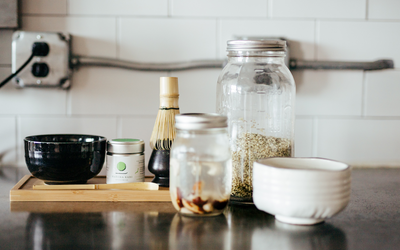
Making matcha can be a meditative experience if you let it. You have to whisk it, wait a minute, and prepare your drink instead of grabbing something on the way out the door. It only takes a few minutes, but it can be enough to interrupt the autopilot feeling that so many of us live in.
Sometimes, even just the setting in which you enjoy your matcha is enough to set a different tone for the day. Try sitting down to enjoy your drink instead of multitasking while answering emails.
What to do if you're feeling burned out

Don't rely on more caffeine
If you're reaching for caffeine every time your energy dips, check in to see if you’re using caffeine to mask something bigger, like not getting enough sleep, chronic stress, or inconsistent meals. You can also try swapping one of those coffees for matcha, which may give you a steadier source of energy.
Eat before you're starving
Skipping breakfast or working through lunch often leads to blood sugar dips later in the day. Prioritize balanced meals with protein, fiber, and healthy fats to support more consistent energy.
Build breaks into your day
You don't need an hour-long meditation session to reset, but five minutes outside, a short walk, stretching, or stepping away from your computer to make a cup of matcha can be helpful.
Pay attention to your schedule
Many of us keep adding commitments without taking anything away. If you're constantly overwhelmed, look for one thing you can postpone, delegate, or simply say no to. Protecting your time is just as important as managing it.
Bottom line
Burnout isn't something you can solve with a single food or supplement, but your daily habits do matter.
Matcha provides a different kind of energy compared to coffee, which may be helpful if you’re currently feeling burned out. Thanks to its combination of caffeine and L-theanine, it doesn’t give you the same spikes and crashes that many people experience with coffee.
Maybe that's why matcha has become so popular lately – matcha isn’t pro-burnout culture, and it doesn’t promote the idea that we need to squeeze more and more into our day.
Disclaimer: These statements in this blog post have not been evaluated by the Food and Drug Administration. The information provided here is for educational purposes only and should not be considered medical advice. It's essential to consult with a qualified healthcare professional before making any dietary or lifestyle changes.
Resources:
Fritschi C, Park C, Quinn L, Collins EG. Real-Time Associations Between Glucose Levels and Fatigue in Type 2 Diabetes: Sex and Time Effects. Biol Res Nurs. 2020 Apr;22(2):197-204. doi: 10.1177/1099800419898002. Epub 2020 Feb 3. PMID: 32008368; PMCID: PMC7273801.
Jakubczyk K, Kochman J, Kwiatkowska A, Kałduńska J, Dec K, Kawczuga D, Janda K. Antioxidant Properties and Nutritional Composition of Matcha Green Tea. Foods. 2020 Apr 12;9(4):483. doi: 10.3390/foods9040483. PMID: 32290537; PMCID: PMC7231151.
Lovallo WR, Whitsett TL, al'Absi M, Sung BH, Vincent AS, Wilson MF. Caffeine stimulation of cortisol secretion across the waking hours in relation to caffeine intake levels. Psychosom Med. 2005 Sep-Oct;67(5):734-9. doi: 10.1097/01.psy.0000181270.20036.06. PMID: 16204431; PMCID: PMC2257922.