



As the days get shorter and the mornings become crisp, it’s normal to change your routine up a bit. We often swap iced drinks for warm mugs and start spending more time indoors. You may also notice you want heavier, more nourishing meals that feel comforting and grounding. As your cravings change, you might want to adjust your matcha routine too.

One of the best things about matcha is its versatility. You can use matcha to make a hydrating and refreshing mocktail on a hot July afternoon or a warm and cozy latte on a cool October morning. And no matter what, you’ll still be getting all the same benefits, including antioxidants, L-theanine, and steady energy.
If you're ready to embrace fall, here are a few simple ways to transition your matcha habit while continuing to support your health.
Why seasonal routines matter

Our bodies naturally respond to changes in daylight, temperature, and activity levels. As autumn approaches, many people notice shifts in energy, mood, and even appetite.
For some, these can be welcome changes and for others, the changing of the seasons can be really difficult - especially when it comes with a loss of daylight. Maintaining consistent habits can help create stability throughout the transition. Keeping up your healthy habits, whether it's a morning walk, meditation practice, or whisking a bowl of matcha, can provide a moment to ground yourself before the demands of the day begin.
Matcha is uniquely suited to help support you no matter the season, thanks to its combination of caffeine and L-theanine, an amino acid naturally found in tea leaves. Research suggests that L-theanine promotes a feeling of calm and relaxation and may help moderate the stimulating effects of caffeine. When combined with caffeine, like in matcha, many people say they have smoother, longer-lasting energy, especially when compared to coffee.
Instead of the quick spike (and potential crash) and jitters many people experience with coffee, matcha offers a gentler lift that pairs so nicely with slower fall mornings.
Swap iced drinks for warm, comforting lattes

Summer is all about iced matcha lemonade and fruit smoothies, but with fall comes something a bit cozier.
Try preparing your ceremonial matcha with steamed oat milk, almond milk, or whole milk and adding warming spices like:
-
Cinnamon
-
Ginger
-
Cardamom
-
Nutmeg
-
Pumpkin spice
Many of these spices contain naturally occurring polyphenols and plant compounds that have been studied for their antioxidant and anti-inflammatory properties, making them a great complement to matcha's own rich nutrient profile.
Wondering how milk impacts matcha’s nutrients? Read more here.
Embrace seasonal flavors

Fall produce pairs surprisingly well with matcha's earthy, slightly sweet flavor.
Try adding a teaspoon of matcha to recipes that also include:
-
Pumpkin
-
Pears
-
Apples
-
Sweet potatoes
-
Maple
-
Vanilla
-
Roasted pecans
Think pumpkin spice matcha maple latte, apple-cinnamon matcha chia pudding, or pumpkin pie with a matcha crust. And check out our full recipe library for even more inspiration!
Support your immune system
As school starts back up, we spend more time indoors, and cold and flu season approaches; it’s a good time to start thinking about supporting your immune health.
To keep your immune system optimal, it’s important to keep up with healthy habits like getting enough sleep, eating a healthy diet full of colorful fruits and vegetables, staying physically active, and managing stress. But drinking matcha may also be a valuable addition.
To make matcha, the entire tea leaf is stone-ground into a fine powder and then consumed. This means that matcha provides a concentrated dose of naturally occurring catechins and other plant compounds with antioxidant activity. These compounds may help protect cells from oxidative stress, an important part of maintaining overall health.
Embrace slower mornings

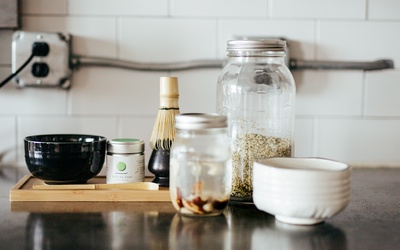
Fall can feel like a welcome chance to slow down after the craziness of summer. Instead of rushing out the door with a coffee in hand, consider taking five intentional minutes to prepare your matcha. All you need to do is:
Measure and sift the powder.
Add warm (not boiling) water.
Whisk until frothy.
Take a deep breath before your first sip.
If you let it, matcha can become an opportunity for mindfulness.
Research has shown that small, consistent mindfulness practices may help reduce perceived stress and improve overall well-being. When combined with the naturally calming effects associated with L-theanine, your morning cup may become more than just a source of caffeine, but a chance to regulate your nervous system.
Bottom Line
Transitioning your matcha routine from summer to fall doesn't mean giving up matcha. Instead, it’s a chance to embrace the flavors of a new season!
Swap iced beverages for warming lattes, experiment with pumpkin and apple-inspired recipes, incorporate antioxidant-rich spices, and use your daily bowl of matcha as an opportunity to slow down and reconnect with yourself.
Disclaimer: These statements in this blog post have not been evaluated by the Food and Drug Administration. The information provided here is for educational purposes only and should not be considered medical advice. It's essential to consult with a qualified healthcare professional before making any dietary or lifestyle changes.
Resources:
Pizzino G, Irrera N, Cucinotta M, Pallio G, Mannino F, Arcoraci V, Squadrito F, Altavilla D, Bitto A. Oxidative Stress: Harms and Benefits for Human Health. Oxid Med Cell Longev. 2017;2017:8416763. doi: 10.1155/2017/8416763. Epub 2017 Jul 27. PMID: 28819546; PMCID: PMC5551541.
Unno K, Furushima D, Hamamoto S, Iguchi K, Yamada H, Morita A, Horie H, Nakamura Y. Stress-Reducing Function of Matcha Green Tea in Animal Experiments and Clinical Trials. Nutrients. 2018 Oct 10;10(10):1468. doi: 10.3390/nu10101468. PMID: 30308973; PMCID: PMC6213777.
Carlsen, M. H., Halvorsen, B. L., Holte, K., Bøhn, S. K., Dragland, S., Sampson, L., … Blomhoff, R. (2010). The total antioxidant content of more than 3100 foods, beverages, spices, herbs and supplements is used worldwide. Nutrition Journal, 9(1).
Chacko, S. M., Thambi, P. T., Kuttan, R., & Nishigaki, I. (2010). Beneficial effects of green tea: A literature review. Chinese Medicine, 5, 13.
Jakubczyk, K., Kochman, J., Kwiatkowska, A., Kałduńska, J., Dec, K., Kawczuga, D., & Janda, K. (2020). Antioxidant Properties and Nutritional Composition of Matcha Green Tea. Foods (Basel, Switzerland), 9(4), 483. https://doi.org/10.3390/foods9040483
Williams JL, Everett JM, D'Cunha NM, Sergi D, Georgousopoulou EN, Keegan RJ, McKune AJ, Mellor DD, Anstice N, Naumovski N. The Effects of Green Tea Amino Acid L-Theanine Consumption on the Ability to Manage Stress and Anxiety Levels: a Systematic Review. Plant Foods Hum Nutr. 2020 Mar;75(1):12-23. doi: 10.1007/s11130-019-00771-5. PMID: 31758301.