



If you're heading back to school (or have a little one starting school) this fall, you know it can be an exciting time of year, but also a stressful one! From early starts and packing lunches to after-school activities, everyone in the family may be looking for a little energy boost and a pick-me-up. The problem is that coffee and energy drinks can cause many to feel jittery and anxious, and even disrupt sleep. These drinks are also often loaded with sugar, which isn't ideal.
If you’re looking for a healthier option to help you combat the back-to-school rush, consider swapping from coffee to matcha. Matcha is a type of powdered green tea that delivers a calm focus and sustained energy- without the jitters.

Keep reading to find out why matcha is the ultimate back-to-school companion for students, parents, and teachers alike.
Benefits of matcha

Sustained Energy
Unlike coffee, which can lead to a burst of energy, but is often followed by a crash, matcha provides steadier, longer-lasting energy. This is thanks to its unique combination of L-theanine and caffeine. L-theanine is an amino acid known for helping you to feel relaxed, but not drowsy. Paired with caffeine, it leads to a calm alertness. Essentially, L-theanine counteracts any of the adverse side effects that often come along with caffeine.
Improved focus and concentration
Research shows that L-theanine may help to improve memory, focus, and attention. Particularly when it’s paired with caffeine, like it is in matcha. Some studies show that L-theanine also has neuroprotective effects.
Improves mood
This time of year can be stressful (for both kids and parents alike). Matcha has calming properties that can help to alleviate both stress and anxiety and improve mood. Researchers believe that the combination of EGCG (an antioxidant that matcha is particularly potent in) and L-theanine may help to reduce cortisol levels and physiological stress response.
Nutritional Powerhouse
Matcha is packed with antioxidants and anti-inflammatory benefits that may help support immune health, reduce inflammation, and reduce the risk of certain chronic diseases.
Easy ways to add matcha to your day

Morning Latte
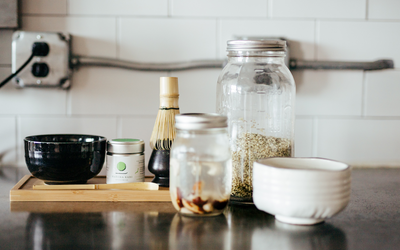
One of the best ways to incorporate matcha into your school-year routine is with a cup of matcha in the morning, especially if it replaces other, less ideal, forms of caffeine! Drink it the traditional way, whisked with hot water, or add milk and a splash of sweetener to make a simple latte.
Starting your day with matcha can help you feel calm, focused, and energized. Plus, it won’t mess with your sleep or cause an afternoon crash later on.
If you’re looking for other ways to add matcha to your day, keep reading!
On-the-go
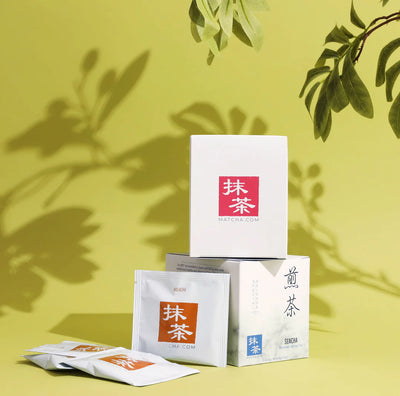
If you have a busy morning, try out our matcha on-the-go packs. Ideal for those busy mornings when you need something quick or when you’re on the move. Just add some water, give it a shake or a froth, and you’re ready to go.
Post afternoon activities
For pre- or post-after-school activities, give our matcha-aid a try. Our proprietary blend of electrolytes, matcha powder, and adaptogens such as ginseng and cordyceps may help boost performance, speed up recovery, and overall vigor. Idea for after a long day of work or pre- or post-school sports!
Smoothie boost
Try adding a teaspoon of matcha to a smoothie for an antioxidant and energy boost.
Looking for some other fun ways to include matcha in the kitchen? Check out our recipes!
Kid and teen-friendly matcha ideas

Yes, kids and teens can safely drink matcha! Just remember that it does contain caffeine, so moderation is key. For younger kids, try our decaf matcha. Some fun ways to introduce matcha to kids are matcha yogurt parfaits for a quick breakfast, matcha cookies for an after-school treat, and even matcha popsicles as a refreshing snack.
Read more about whether kids can drink matcha here.
How to choose high-quality matcha

When it comes to matcha, quality matters; a high-quality matcha should have a vibrant, bright green color (dull or yellowish powder can be a sign of a lower-quality product). Look for matcha sourced from Japan, where the highest standards of cultivation and processing are maintained. Always check that your matcha contains no fillers or additives. For drinking, ceremonial-grade matcha is best. Culinary-grade matcha is best for smoothies and baked goods. And remember, once you open your matcha, store it in the fridge or freezer to prevent it from oxidizing.
Don’t be fooled by fake matcha! Learn more here.
Bottom Line:
This school season, skip the jitters, anxiety, and sugar crashes. And instead drink matcha! Matcha offers a calm, steady energy that supports focus, reduces stress, and gives your body a big antioxidant boost. Whether it’s a morning latte, an on-the-go pick-me-up, or a smoothie upgrade, matcha is the best way to power through your busy day. Start slow (especially with kids), have fun with recipes, and see how matcha can support you this school year.
Disclaimer: These statements in this blog post have not been evaluated by the Food and Drug Administration. The information provided here is for educational purposes only and should not be considered as medical advice. It's essential to consult with a qualified healthcare professional before making any dietary or lifestyle changes.
Resources:
Owen GN, Parnell H, De Bruin EA, Rycroft JA. The combined effects of L-theanine and caffeine on cognitive performance and mood. Nutr Neurosci. 2008 Aug;11(4):193-8. doi: 10.1179/147683008X301513. PMID: 18681988.
Giesbrecht T, Rycroft JA, Rowson MJ, De Bruin EA. The combination of L-theanine and caffeine improves cognitive performance and increases subjective alertness. Nutr Neurosci. 2010 Dec;13(6):283-90. doi: 10.1179/147683010X12611460764840. PMID: 21040626.
Mokra D, Joskova M, Mokry J. Therapeutic Effects of Green Tea Polyphenol (‒)-Epigallocatechin-3-Gallate (EGCG) in Relation to Molecular Pathways Controlling Inflammation, Oxidative Stress, and Apoptosis. Int J Mol Sci. 2022 Dec 25;24(1):340. doi: 10.3390/ijms24010340. PMID: 36613784; PMCID: PMC9820274.
Suzuki Y, Miyoshi N, Isemura M. Health-promoting effects of green tea. Proc Jpn Acad Ser B Phys Biol Sci. 2012;88(3):88-101. doi: 10.2183/pjab.88.88. PMID: 22450537; PMCID: PMC3365247.
Mancini E, Beglinger C, Drewe J, Zanchi D, Lang UE, Borgwardt S. Green tea effects on cognition, mood and human brain function: A systematic review. Phytomedicine. 2017 Oct 15;34:26-37. doi: 10.1016/j.phymed.2017.07.008. Epub 2017 Jul 27. PMID: 28899506.